top of page
Search

Before you start thinking about buying new equipment, take advantage of the full potential of the one you already have.
Optimal speaker placement

Proper speaker placement is the most effective and free upgrade to any audio system. Once you've chosen the right type of speakers for your space , it's time to position them so they can really shine.

We reveal five simple steps to optimize your setup and discover a new level of detail and spatiality in your music.


Five steps to superior sound

Step 1: Establishing a stereo triangle (the basis for the sound image)


This is the absolute foundation of any good setup. Start by placing your speakers and your main listening position in an equilateral triangle . This means that the distance between the left and right speakers should be approximately the same as the distance from each speaker to your ears. This geometry (also known as a 60-degree angle) allows the sound from both channels to meet harmoniously at the listener, creating a three-dimensional soundstage with clearly defined instruments in the space.


Once you have that baseline, the experimentation begins. Many manufacturers and audiophiles recommend trying to sit a little further back for an even more realistic and immersive soundstage. The rule of thumb is that your listening distance should be at least 1.2 times the distance between the speakers . This may result in an even wider and more "open" sound, so it's definitely worth trying both placements.


Step 2: Dancing with the back wall (bass volume and definition)

The distance of the speakers from the wall behind them directly affects the amount and quality of bass. The closer the speaker is to the wall, the more emphasis the bass will have. This can be helpful if you find the sound too thin, but it often leads to a flat and imprecise bass. Start by placing the speakers about a meter from the wall , then gradually move them back until you find a point where the bass is full but still defined and fast.


____________________________

But what if your space simply doesn't allow you to place your speakers that far from the wall?

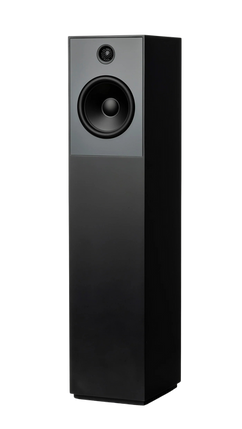
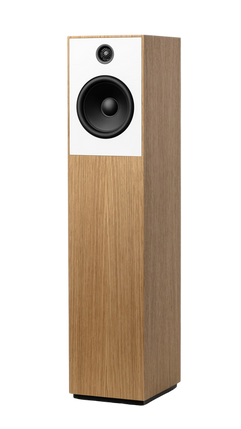
Here comes the brilliant exception that proves the rule: the Swedish speakers Guru Audio . Their entire philosophy is designed exactly the opposite of most. Instead of fighting the wall, they use it to their advantage ; their unique design allows the sound to bounce off the wall and blend harmoniously with the direct sound, creating an extremely precise and musical bass without distortion. Models such as the Guru 8 or Guru Q10 are therefore the ideal solution for rooms where the speakers must be placed right next to the wall.


Guru 8 speaker
From€1,790.00€1,990.00
Buy Now
Guru 12 speaker
From€2,990.00€3,290.00
Buy Now
Guru 20 speaker
From€3,490.00€3,890.00
Buy Now
Guru 28 speaker
From€4,490.00€4,990.00
Buy Now
Guru Q10 speaker
€2,490.00
Buy Now

____________________________


Step 3: The Art of "toe-in" (focus sharpness and image width)

"Toe-in" is the term for turning the speakers inward, towards the listening position. This directly affects the soundstage. Start with a setup where the speakers are pointed straight ahead. Then gradually turn them inward. A larger angle of rotation will create a narrower but more sharply focused soundstage, which is great for vocals. A smaller angle will create a wider and more airy soundstage.


There is no right answer here ; find the balance that works best for you and your music.


Step 4: Correct pitch (vertical straightness)

For the most natural sound reproduction, especially vocals, the tweeter of the speaker should be approximately at the height of your ears when you are sitting in the listening position. With freestanding speakers, this is usually already ensured. With bookshelf speakers, however, this is a key reason to use dedicated speaker stands , such as the Norstone Stylum . Placing it on a cabinet that is too low will result in a muffled sound and a poorer soundstage.


Step 5: Symmetry and first reflections (clarity and balance)

Try to ensure that the left and right speakers have as similar an acoustic environment as possible . If one speaker is in a corner and the other is in an open space, the sound image will be unbalanced. Also, try to limit the first reflections from smooth surfaces. A simple "mirror trick" can help: sit in the listening position and have an assistant slide a mirror along the side wall. The point of the first reflection is where you see the tweeter in the mirror, which is a good place to cover with a picture, bookshelf, or dedicated absorbers.


When you need the finishing touch

Once you have the basic setup in place, you can further enhance the sound with dedicated accessories. Speaker stands like the Norstone Stylum are more than just furniture ; their solid construction and sand-filling capability dampen vibrations and provide a stable base.

Norstone Stylum I speaker stands
€129.00
Buy Now
Norstone Stylum II speaker stands
€139.00
Buy Now

The ultimate improvement is provided by isolation feet and pads . Their task is to "decouple" or isolate the speaker or audio component from the substrate. This prevents the transmission of unwanted vibrations, which is directly reflected in improved midrange clarity and significantly more defined and accurate bass.


Your ears are your most important instrument.

Speaker placement is not an exact science, but a process of finding the optimal spot for your space and your personal taste.


Use these instructions as a starting point, but don't be afraid to experiment.

Move the speakers, listen, and trust your ears. The best setup is the one that sounds best to you.


If you want to hear how big a difference it can make, or if you need advice on choosing the right stands and accessories, we invite you to a demonstration in our showroom . Together, we will make sure your system sounds better than ever.


  • Jul 31, 2025
  • 4 min read

Updated: Aug 12, 2025

Sound that breaks the rules and loves your walls


You buy new, high-end speakers, bring them home with excitement, place them in your living room... and the sound is disappointing. The space "eats" them, the bass echoes unpleasantly off the walls.


This is a frustration familiar to every audiophile, and a problem that most manufacturers solve with the instruction: "Place the speakers as far away from the walls as possible."

But what if there was a brand that turned that rule on its head? What if there were speakers that not only tolerated being close to a wall, but needed it to breathe at full power?

This is the story of Swedish brand Guru Audio , which was born not in a marketing department, but out of engineering tenacity and a love of music. Their motto is simple: sound should be great where people live, not just in the lab.


That's why every speaker, from idea to final product, is designed in Stockholm and manufactured under strict control in Europe, with real spaces and real listeners in mind.


A solution that seems to violate the laws of physics

The engineers at Guru Audio decided not to create speakers for ideal, acoustically treated rooms, but for the spaces people actually live in. Their solution is simple but ingenious: instead of fighting against sound reflections from walls, they incorporated them into the speaker design itself.

Place the Guru speaker right up against a wall and something happens that seems to defy logic. They use the reflection off the wall to amplify and extend the bass.


The result? From a surprisingly small enclosure, you get deep, precise, and punchy bass that would otherwise require significantly larger speakers.


Meet the Guru speaker family

The entire Guru speaker line follows this unique philosophy, but is also adapted to different needs and room sizes.


The successor to the legendary "Junior" model is ideal for small to medium-sized rooms . Don't let its small size fool you; thanks to its wall-mounted design, the Guru 8 reproduces bass down to 34 Hz , which is incredible for a speaker of its size. It is an extremely fast, rhythmic and musically communicative speaker that is the perfect entry point into the world of Guru sound.


The Guru 12 is a larger bookshelf speaker designed for medium-sized rooms . It uses a larger 125mm bass/midrange driver and a more advanced Helmholtz resonator enclosure design, allowing it to reach even deeper, down to an impressive 30Hz . The sound is fuller, more authoritative and offers even more detail, while maintaining its signature speed and precision.


The Q10 is a speaker with a different mission. Originally designed as a professional studio monitor , its goal is absolute sonic truth. It does not embellish the sound, but presents it exactly as it was recorded. It is the choice of audiophiles and music purists who want to hear every detail and flaw in the recording.


The Guru 20 was designed for true connoisseurs who seek the authority and sonic fullness of a freestanding speaker, but in a stylish and extremely compact form. Its slim body hides the same advanced driver units as the acclaimed bookshelf model Guru 12 , allowing it to maintain its recognizable speed and precision. The larger volume of the cabinet gives it the opportunity to add even greater depth to the sound image and extend the reproduction of bass tones down to an astonishing 28 Hz . It is an ideal solution for medium to large rooms , where its sophisticated appearance and powerful sound will become the centerpiece of your musical experience.


The Guru 28 is the pinnacle of the range and was created for uncompromising sound reproduction in the largest living spaces. In this model, engineers have combined the best of both worlds: the precision of a studio monitor with the power of a large floorstanding speaker. Its advanced design includes a renowned 102mm mineral fibre midrange driver, derived from the legendary Q10 studio model , ensuring exceptional clarity of vocals and instruments. For powerful and precise bass, two dedicated 110mm woofers are hidden in the back of the cabinet and, when placed close to the wall, create a deep sound foundation that reaches down to an astonishing 26Hz . The Guru 28 is a speaker for those who want to experience the full dynamic and frequency range of music without limits.


Standpoint stands

With bookshelf models like the Guru 8 , Guru 12 and Guru Q10 , proper placement is key. That's why Guru has developed the dedicated Standpoint stands . Their job is not just aesthetic; at 52 cm high, they place the speaker at the ideal listening height , and their robust construction made of solid oak and aluminum prevents the transfer of vibrations . They are an essential accessory for anyone who wants to get the most out of their Guru speaker.


Sound for people, not microphones

But the real magic happens when you sit down and listen.

Critics around the world describe them with words like "extremely enjoyable musical communicators" and "infectiously rhythmic."

Instead of a single ideal listening point where you have to sit still, Guru speakers create a wide sound field . This means that the entire family or group of friends can enjoy the same high-quality sound, not just one person.


Sound for your home, not the lab

Guru Audio is a brand for connoisseurs who appreciate smart, innovative solutions. For those who want top-notch sound but don't have the space or desire for large speakers in the middle of their living room. And above all, they are for those who believe that the essence of Hi-Fi is to forget about the equipment and simply enjoy the music.

If you recognize yourself in this description, we invite you to our showroom to experience for yourself how different music can sound when speakers work together with your space.


In every audio reproduction chain, there is an undeniable principle: the final sound quality is inextricably linked to the quality at the very beginning .


Each audio component in the system can only preserve or degrade the signal ; none can recover information that was lost or corrupted at the source. This is a fundamental principle known in the audio world as " Garbage In, Garbage Out ".


The job of the audio source – be it a turntable, CD player or network streamer – is to read the musical information and convert it into the most accurate and pure electrical signal possible. Any error, distortion or noise introduced at this first, crucial point is irreversible. The next components in the chain, the amplifier and speakers, will only faithfully (and louder) reproduce this flawed signal. That’s why the path to superior sound always starts at the source.


The world of analog sources

The turntable is the king of analog sources, but its quality depends on mechanical precision.


  • Foundation of stability:

A massive and heavy base (base) and a heavy, resonance-dead platter are key to dampening unwanted vibrations and ensuring completely stable rotation. In models like the Pro-Ject X2 B , the heavy acrylic platter acts as a flywheel, eliminating even the slightest fluctuations in speed.

  • The heart of the system - the lever and head:

A turntable arm must be extremely stiff, yet lightweight, so that the needle can accurately follow the microscopic grooves in the record. Pro-Ject's carbon tonearms are a perfect example of this philosophy. At the end of the arm is a turntable head that converts the mechanical movement of the needle into an extremely weak electrical signal.


  • An essential partner - a turntable preamplifier:

This signal is about 1000 times weaker than the signal from a CD player , so it requires a dedicated, high-quality preamplifier . Devices like the NAD PP4 or Pro-Ject Phono Box S2 not only amplify the signal, but also restore it to its original state with precise RIAA equalization, which is crucial for proper tonal balance.

NAD PP4 phono MM and MC preamplifier
€279.00
Buy Now
Pro-Ject Phono Box S2 MM/MC phono amplifier
€189.00
Buy Now

The world of digital resources

Digital sources are the most widespread today, but even among them there are huge differences in quality.

  • Is the CD player still relevant?

Absolutely. A quality CD player , like the NAD C 538 , is not just a "player." It is a combination of a precision transport mechanism that reads the data without errors and a high-quality D/A converter (DAC) that converts the string of ones and zeros back into an analog music wave.


NAD C 538 CD player
€499.00
Buy Now

Network players (Streamers):

A gateway to the world of music

Devices like the Bluesound Node or the NAD CS-1 have become the center of the modern Hi-Fi system. Their job is to access digital libraries and streaming services and forward the data.


Bluesound Node Nano network player
€349.00
Buy Now
Bluesound Node N132 network player
€599.00
Buy Now
Bluesound Node Icon
€1,099.00
Buy Now

But here too lies a key component.

Digital heart - D/A converter (DAC):

The DAC is the "digital heart" of any digital source. Its quality directly affects how natural, detailed and dynamic your digital music will sound. High-end chips like the ESS Sabre found in NAD and Bluesound devices deliver exceptional accuracy and low levels of distortion known as "jitter" (timing errors in the digital signal).


How to recognize a quality source?

Key features that separate a good source from a top one:

  • Build quality: The solid body and quality materials are not just aesthetically pleasing; they dampen vibrations that can damage the delicate signal.

  • Power quality: Stable and clean current is the basis for the good performance of any audio component.

  • Advanced technology: In the case of turntables, this is the precision of the arm and motor, and in the case of digital sources, the quality of the D/A converter and its implementation.


Invest at the beginning of the audio chain

The principle of " garbage in, garbage out " is a golden rule followed by every experienced audiophile. A good sound source is the investment that pays off the most, as it allows your amplifier and speakers to have the opportunity to show their full potential.


We invite you to our showroom , where you can hear firsthand how big the difference can be between different sources on the same system. This is often the most eloquent proof why the path to superior sound always begins at the source.


bottom of page